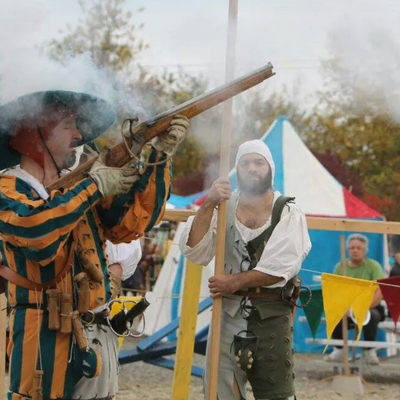
Das Geld Fähnlein, c. 1528
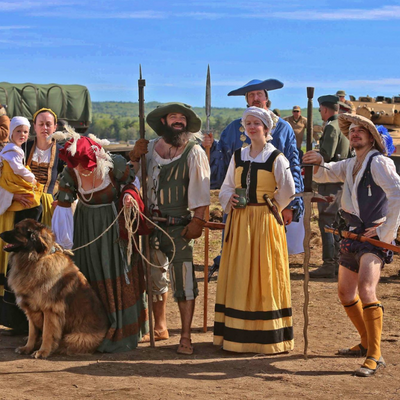
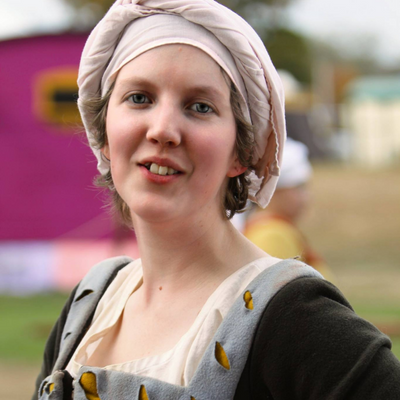
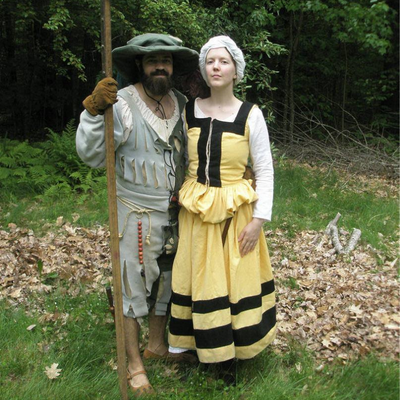
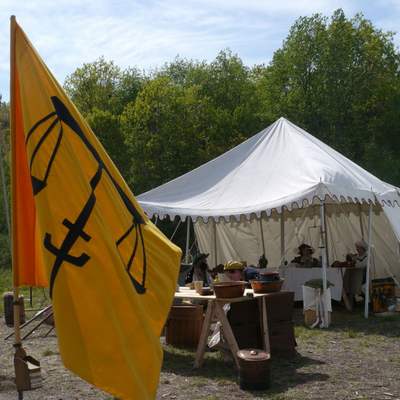
The year is 1528, and with the population growing in Europe, young men are becoming mercenaries in support of the Holy Roman Empire. We are Das Geld Fähnlein, marching under the protection of Saint Moritz and the flag of Gustav von Reischach.
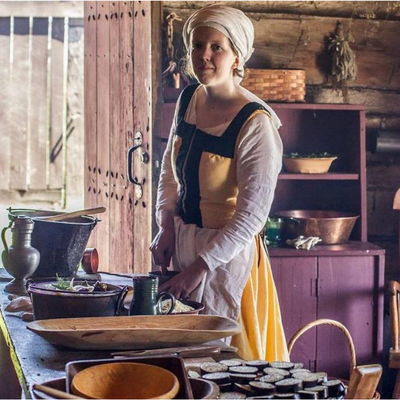
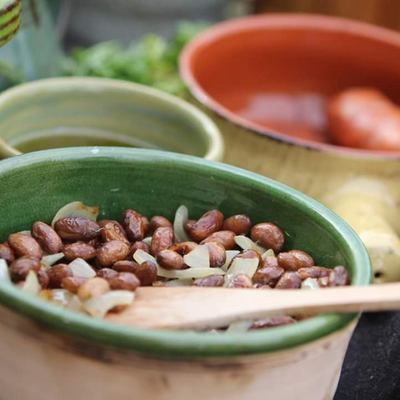
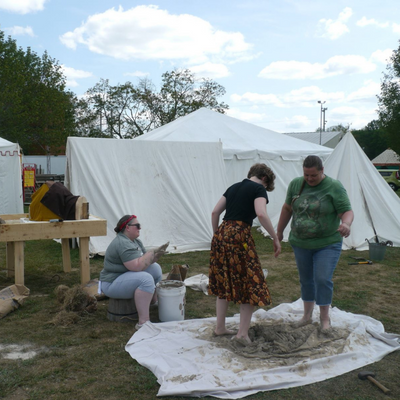
No army can march by itself, and the heart of Das Geld is the women. We keep the Fähnlein moving, and act as auxiliary support on the battlefield. Katarina, my character, is the wife of Erich auf den Norten, who may or may not be on the run for alleged arson. But that's a different story. He is camp brewer, Katarina is camp cook and whatever-else-needs-doing.
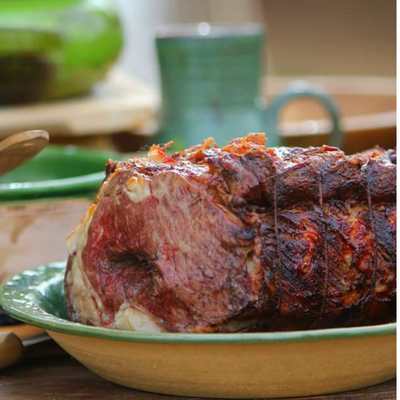
We build our characters from hours of research involving extant documents and artifacts, woodcut images and art, as well as archaeological sources. While in camp, we remain in character and interact with the public in first-person, meaning I have quite literally cooked for an army (albeit a small one) on an open fire. We strive to maintain the highest degree of historical accuracy that we can, down to making our own pikes and sewing our outfits by hand.
(Scroll horizontally to see more images)
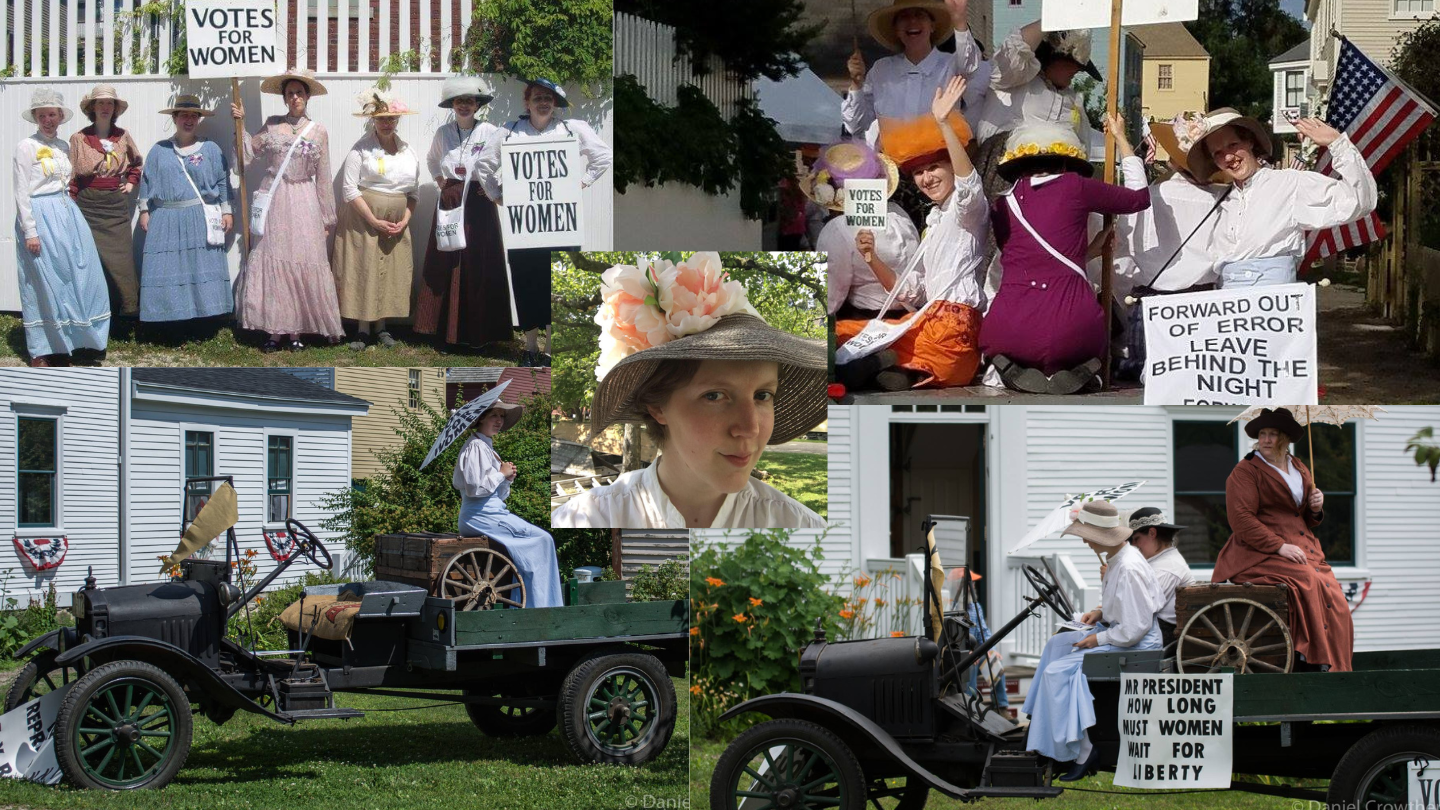
Women's Suffrage Movement, c. 1915
As a member of the Puddle Dock Chapter of the New England Women's Suffrage Association, I join my sisters in campaigning for women's right to vote. The year is roughly 1915, and though we wear the garb, we do not remain in character for this portrayal. We agreed that being able to switch back and forth would better allow us to discuss the broader history of the suffrage movement from a modern context.
For example, if we remained set in 1915, we would not be able to highlight the fact that the passage of the 19th Ammendment in 1920 did not actually secure the right to vote for all women. Indigenous women were not allowed to vote until 1924, and in some states not until 1962; some Asian-American women could not vote until 1952; some Latina women could not vote until 1935; these are just a few examples. Various literacy and language requirements as well as other technical requirements prevented women from across the board from voting for decades after the passage of the 19th Ammendment, disproportionately impacting BIPOC communities, and continue to do so today. By maintaining a modern perspective in our interpretation, we are able to discuss these nuances with the public.
Decolonization
Crash Course
This project stemmed from my work at the Abbe Museum as an Education intern. My experiences there led me to realize that the general public does not understand the term decolonize,
or what it means for Indigenous people. In a 2-credit reflection course on my internship, I created a crash course introducing decolonization as a concept. This site will eventually be imported here and cleaned up, but is currently reflective of my understanding of technology in undergrad v. now. To visit the site as it stands, please click here.